
The Shadow of Mother Nature: Us
"Until you make the unconscious conscious, it will continue to direct your life and you will call it fate" Carl Jung.

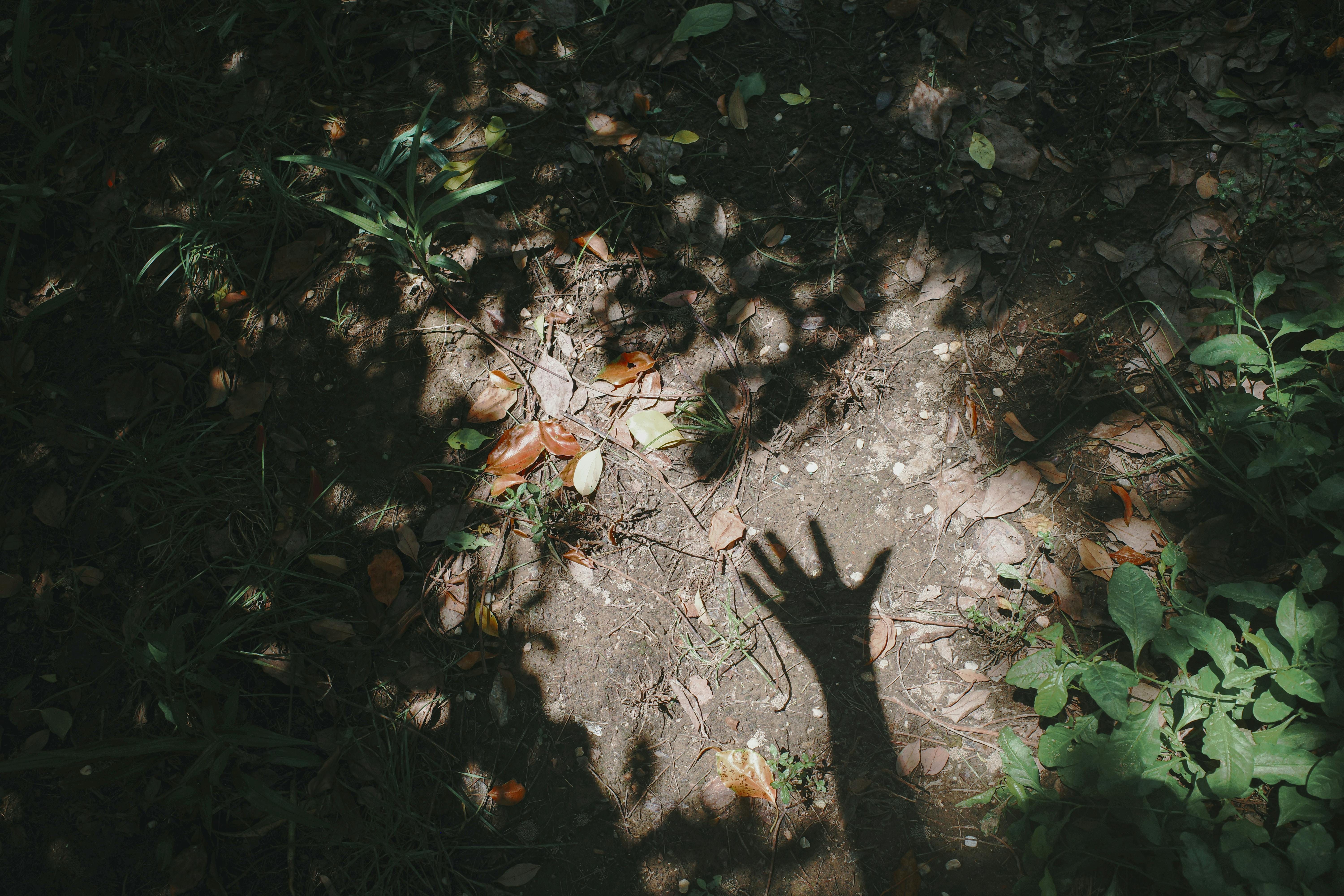
There is a certain grief that runs beneath the surface of environmental awareness — the grief of someone who genuinely loves the natural world and cannot stop participating in its destruction. You know the numbers. You have felt the weight of them. You have stood in a forest or beside a river or on a shoreline and felt, with complete clarity, that the living world called “Eden” matters — and then returned to a civilization revolved around consumption over empathy, the opposite of what God commanded Adam and Eve in the Bible’s book of Genesis.
This is not hypocrisy, though it can feel like it. It is not ignorance, though we are sometimes tempted to see it as such. It is something older and stranger: the signature of a wound that runs not through our knowledge but through our psychology — a split so deep and so old that most of us inherited it fully formed, before we had the language to name what had been divided. Carl Jung called this kind of wound the Shadow. And the story of how Western civilization came to project its Shadow onto the natural world — and what that projection has cost both the world and the psyche — may be the most important collective karmic lesson of our time.
So what actually is the Shadow? Not the villain of the story. Nor the “evil” partner of Adam called “Eve.” Jung’s Shadow is simply everything the conscious self decides it cannot be — the qualities, impulses, and hungers that the ego finds unacceptable and pushes out of awareness. Not because they disappear. They don’t. They go underground, into the unconscious, where they operate without your knowledge or consent, influencing your choices and reactions in ways you can’t quite account for.
We all do this individually. The person who was taught that anger is dangerous learns to disown their rage — and then wonders why they keep attracting conflict, or why their patience snaps at seemingly random moments. The child told that neediness is weakness learns to disown their vulnerability — and then can’t understand why genuine intimacy feels so threatening. What we push down doesn’t go away. It just starts driving from the back seat.
What most people don’t realize is that cultures do exactly the same thing. Civilizations have Shadow material too — entire categories of experience that a culture collectively decides are incompatible with its self-image, and so pushes into the cultural unconscious. And here’s where it gets ecologically interesting: one of the primary mechanisms for managing Shadow material — both personally and collectively — is projection. You take what you can’t accept in yourself and you put it out there, onto something else. You relate to it out there with the same fear, contempt, or compulsion to dominate that the original material triggered in you. The external world becomes the screen for your interior drama. Like throwing apples at a window.

For Western civilization, that screen has largely been the natural world and the “apples” we are using to destroy it came from Mother Earth herself.
This didn’t happen overnight and it didn’t happen by accident. It was a gradual process of self-definition — civilization defining itself as what nature is not. Rational, not instinctual. Orderly, not chaotic. Productive, not wild and free. Immortal in its ambitions, not subject to decay and death like everything else that lives.
The Enlightenment accelerated this split dramatically. Reason was elevated to the highest human value, and everything associated with the non-rational — the body, the emotions, the animal, the dark, the cyclical, the instinctual — was quietly pushed to the collective shadow that Christians call “The Devil.” Descartes drew a clean line between mind and matter, between the human subject and the natural object. Nature became a machine to be studied and optimized rather than a community to be lived within. And industrialization took that philosophical position and built an entire economic system on top of it — one premised on the idea that the natural world exists as raw material for human purposes only.
Each step in this process required pushing something into the Shadow. The body. Wildness. Darkness. Death. The animal nature we share with every other creature on Earth. These weren’t eliminated from human experience — they can’t be — but they were progressively disowned, judged as lesser, and projected outward onto the thing that seemed to embody them most completely: the natural world itself.
Here’s what that looks like in practice. These aren’t abstract philosophical positions. They’re projections most of us live in a subconscious way every day without noticing.
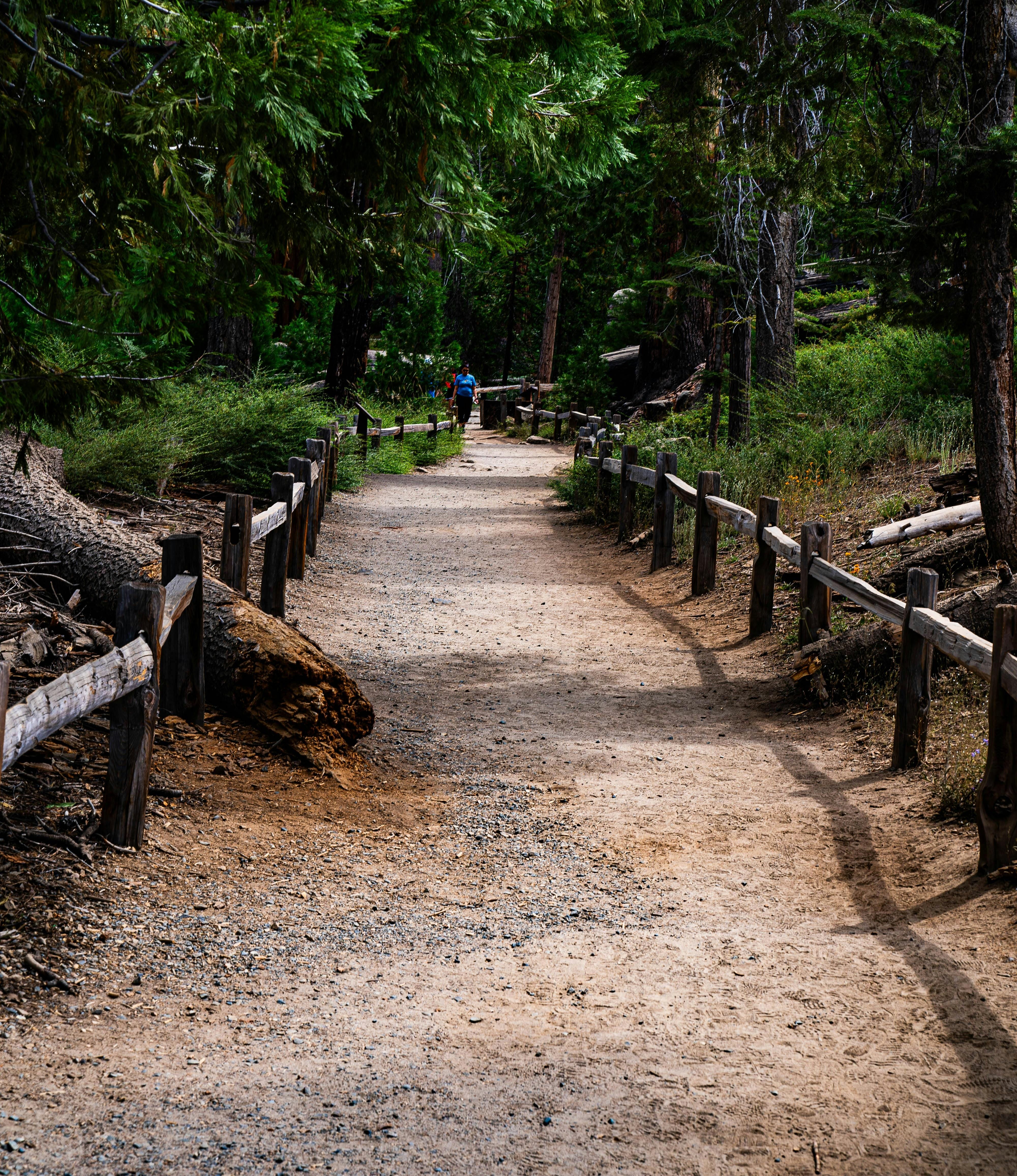
Wilderness as threat. There’s a reason so many people feel a low-grade unease in genuinely wild places — dense forest, open ocean, true darkness. Rationally we know the statistical risk is minimal. But the unease isn’t really about bears or getting lost. It’s the psyche recognizing something that doesn’t respond to control. And control is what the ego most desperately needs. The wilderness triggers the disowned heart within — and the response is fear, the compulsion to tame, or the urge to leave. We have spent enormous energy and money on making wilderness safer, more accessible, more managed — which is another way of saying less wild and free for the animals and plants living there. The forest with the paved path and signs is psychologically much easier to visit than the forest without them. Ever visited one?
Nature as resource. This one runs so deep it’s almost invisible. The default perceptual frame for the natural world in most Western minds is utility — what is this for, what can this do, what is this worth. A forest is timber. A river means irrigation. A wetland is land that happens to be inconveniently wet right now. The inability to perceive the natural world as anything other than raw material isn’t greed, exactly — it’s a failure of recognition. You cannot exploit what you recognize as that which belongs to nature. The projection mechanism requires otherness — the natural world must be fundamentally “not-us” for the extraction to feel acceptable. And so we maintain the psychological tension not because we have to but because it is more convenient to project the shadow onto nature than address it within ourselves.
The body as inferior. We live in a civilization that treats the human body as a vehicle for the mind — something to be managed, optimized, and overridden when it inconveniently wants rest or pleasure or stillness. The split between mind and body is so normalized we barely notice it. But there’s an ecological consequence to this that rarely gets discussed: a person who is dissociated from their own body cannot feel ecological destruction in their flesh. The body is the organ through which we are most directly connected to the natural world — through breath, through eating, through the sensory experience of being a mammal in an environment. When we cut off from the body, we simultaneously cut off from the living world it’s embedded in. The climate change crisis is partly a crisis of a civilization that has collectively lost the ability to feel what’s happening to the ground it stands on.
Darkness and death as enemies. We have waged an extraordinary campaign against darkness. We light our cities so thoroughly that most people alive today have never seen the Milky Way. We suppress natural decay with chemicals, embalm our dead, and design our built environments to suggest that nothing organic is happening anywhere nearby. And ecologically, this has been catastrophic — nocturnal ecosystems are collapsing under light pollution, soil microbiomes are devastated by chemical suppression of natural decomposition, and our inability to let dying systems die gracefully has led us to prop up extractive industries and agricultural practices long past the point where the ecosystem has signaled it cannot sustain them.
The animal as lesser. Perhaps the most psychologically loaded projection of all. We are animals — this is not a metaphor, it is a biological fact — but Western culture has spent centuries insisting otherwise, defining humanity specifically as what transcends the animal. And so the animal body, the animal instinct, the animal hunger, the animal mortality, all get pushed into the Shadow. And then projected outward onto actual animals, who become the screen for everything we’ve disowned about our own nature. The contempt for wild animals that allows factory farming, trophy hunting, and the casual elimination of habitat isn’t really about the animals. It’s about what the animals represent in the collective unconscious — the messy, instinctual, mortal, ungovernable dimension of the self that civilization decided it didn’t want to be.
The ecological cost of all this projection is not subtle. A landscape that functions as the collective Shadow screen of an entire civilization does not fare well. Conservation efforts repeatedly run into a wall that isn’t political or economic — or isn’t only political or economic — but psychological. We protect what we identify with and destroy what we project our Shadow onto. You can pass all the environmental legislation you want and it will be undermined at every turn by a culture that is, at an unconscious level, using the natural world as a dumping ground for disowned identity. The legislation is fighting the symptom. The Shadow is the disease.
This is what the ecopsychology field has been documenting since the early 1990s — that our dysfunctional relationship with the environment cannot be fully understood or healed through policy, technology, or information alone, because its deepest roots are psychological. The work of ecological healing, in this view, is partly the work of recovering that buried sense of belonging. And you can’t do that without going into the Shadow.
Here’s the thing about Shadow work that makes it both difficult and genuinely hopeful: the Shadow cannot be eliminated. Jung was very clear about this. You cannot simply decide to stop having a Shadow, any more than you can decide to stop casting a physical shadow in sunlight. The only options are to keep it unconscious — in which case it operates without your awareness and generally causes damage proportional to how thoroughly you’ve denied it — or to bring it into consciousness, which Jung called integration.
Integration doesn’t mean becoming the thing you feared. It means recognizing it as yours, understanding where it came from, and finding a way to relate to its energy consciously rather than being driven by it blindly. The person who integrates their rage doesn’t become violent — they become someone who understands their anger, can feel it without being controlled by it, and can sometimes use it as information about what genuinely matters to them. The energy that was destructive when unconscious becomes, when integrated, a source of genuine vitality.
The same principle applies collectively. Integrating the cultural Shadow around the natural world doesn’t mean abandoning civilization and living in the woods like cavemen — it means recovering the parts of human experience that civilization pushed into the Shadow, and finding ways to honor them within a life that is necessarily embedded in the modern world. Reclaiming the body as a vessel for spirit. Accepting death as part of the cycle rather than as the enemy of progress. Recognizing the animal dimension of our nature not as something shameful but as something that connects us to every other living thing on the planet.
This is not easy work. It is not a substitute for political action or structural change. But it is the psychological foundation without which political action does nothing. You cannot build a sustainable civilization out of people who are still using the natural world to their advantage while climate change continues to accelerate in severity. The outer work and inner work have to proceed together according to Jung.
As a metaphor, society needs to mix the Lion (our light/ spirit) and the tiger (animal self) in a healthy way to create a New Earth. We need to be “healthy ligers” together, and the purpose of this Substack blog is to guide us to that timeline.
There’s something almost paradoxical about the moment we’re in. The climate crisis — the scale of it, the urgency of it, the way it is now impossible to ignore — is forcing a confrontation with the Shadow that civilization has been successfully avoiding for centuries.
In Jungian terms, this is actually what happens when the Shadow has been suppressed long enough — it erupts. Not politely. Not on a planned schedule. It erupts in exactly the form most likely to demand recognition: as the consequence of its own long suppression. The climate crisis is, among other things, the karmic consequence of delayed action and spiritual bypassing.
That framing might sound abstract until you sit with it for a moment. What we have been destroying is not separate from us. The wild, instinctual, embodied, mortal, darkly generative dimension of life that civilization placed in the Shadow and then projected onto the natural world — it’s ours. It was always ours. The forest we are clear-cutting, the ocean we are acidifying — these are not threats to human life. They are the types of existence that we disowned and then, through that very disowning, became capable of destroying us through a plethora of natural disasters.
The grief that environmentally aware people carry — that persistent grief that doesn’t quite make sense as a response to statistics — might be the psyche’s recognition of this. Not just mourning for something out there that’s being lost. Mourning for something in here that has been missing for a very long time. A kind of homesickness for a belonging to Earth that predates memory.
The natural world has been waiting, with extraordinary patience, for us to recognize what we projected onto it. What we will find there, when we finally look, is ourselves as scary tigers. But are we really 100% tiger or half-lion, half-tiger as one species? We collectively will decide on that outcome.
If this piece resonated with you, consider subscribing for weekly writing at the intersection of psychology, environmentalism, and public health. The Shadow is only the beginning of the conversation.